
The Magic Tucked Inside Bulgaria

I went there for an Erasmus program, not knowing it would capture my heart—and draw me back three more times.
Trip Recap
- Day 1: Hiking in Pirin National Park brought joy, connection, and breathtaking beauty.
- Day 2: Bansko is my soul's retreat, blending nature, community, and unforgettable experiences.
- Day 3: The cozy pizza place became our favorite spot, fostering new friendships.
- Day 4: Plovdiv's enchanting blend of history and creativity invites you to wander endlessly.
- Day 5: Sofia reveals its charm slowly, with a grounding focus on community and wellbeing.
Highlights

Bansko, without a doubt, was the heart of it all. A place that didn’t just impress me—it held me. The mountains, the quiet rhythm of life, the kindness of locals, the sense of community—it all came together in a way that felt rare. It gave me space to breathe, to slow down, and to reconnect with a simpler way of living.
The people I met along the way became an unexpected highlight. From fellow travelers to families who had settled there, to strangers who quickly turned into familiar faces—there was a sense of openness everywhere. Conversations flowed easily, and connections felt natural rather than forced.
Plovdiv brought a different kind of beauty. Its old streets, its artistic energy, and the way it blended history with creativity gave it a unique charm. That feeling—like being in Greece and Los Angeles at the same time—stayed with me. It was both grounding and inspiring.
Sofia, on the other hand, showed me contrast. A capital city that still held onto its roots. The organic food culture, the creative shops, and the historical landmarks scattered throughout the city made it feel layered and alive. And small human moments—like being helped by a stranger who simply chose kindness—added depth to the experience.
Nature, in all its forms, was a constant highlight. From mountain hikes to quiet streams, from fresh market food to animals roaming freely—it reminded me how much I value a life that feels real and connected.
And maybe the biggest highlight of all—
I found a place where I could imagine a different kind of life. Slower. More intentional. More free.
Day 1
One of our favorite places was Pirin National Park, high up in the mountains. Getting there wasn’t easy—we had to take a minibus—but it was always worth it. On one hike, we met two Indian engineers and ended up spending the day together. Their English was flawless, and conversation flowed effortlessly. We talked, laughed, and shared the climb toward a small mountain lake.
It felt more like climbing than hiking—and I loved that. Fresh air, good company, and a physical challenge—there’s nothing quite like it. When we reached the lake, we walked around it as if it were small enough to circle in minutes, taking in the stillness and the beauty. The men offered to take a photo of me. I usually don’t carry my phone, but I said yes. Later, they sent it to me: I’m standing on a large rock, smiling—completely at peace. And I remember thinking, yes, this is what happiness feels like.
After the hike, we parted ways. My son and I hitched a ride back down with a kind French man who seemed to love Bansko just as much as we did. Conversations came and went easily, just like everything else there.


Day 2
This place was unique—truly one of a kind. A hidden gem tucked deep within the vast, humbling mountains of Bulgaria. Sofia had nothing on it. If the two were to race, Bansko would leave the Bulgarian capital far behind—at least in my world.
In fact, I loved it so much that I kept coming back, again and again, in different seasons. It became something like therapy for my soul.
There were the mountains, of course—endless and grounding. A powerful waterfall where I grew used to swimming when the summer heat became unbearable. A lift that carried you high above the picturesque landscape, revealing sweeping views of the town below. Sheep and horses roamed freely, as if they too belonged to the rhythm of the place. And then there were the stray cats and dogs—hundreds of them—yet somehow so gentle, so warm, that I constantly had to resist the urge to take one (or several) home with me.
Bansko felt magical in every sense. A place I will always carry with me.
I first discovered it during an Erasmus program—though “accidentally” doesn’t feel quite right. I don’t believe in accidents. Something drew me there. And later, when I became pregnant, I returned again, this time for a longer stay. I was craving peace—especially after the intensity of living and working in busy Central London—and Bansko gave me exactly that.
It seemed to have everything. A thriving digital nomad community, annual gatherings, and a constant flow of people from all over the world. It didn’t take long to notice how many Ukrainian refugees had settled there, followed later by Israelis. Like America in its own way, Bansko became a quiet melting pot of cultures—and I loved that.
English was widely spoken, which made connection easy. I met so many people along the way. One family—a German couple with four children—stayed in my memory. The mother and I connected instantly. By the time I returned for the third visit, I had a child of my own. Bansko is small, and people tend to cross paths again and again. There was something comforting about that—we didn’t need to plan meetings; life naturally brought us back together.
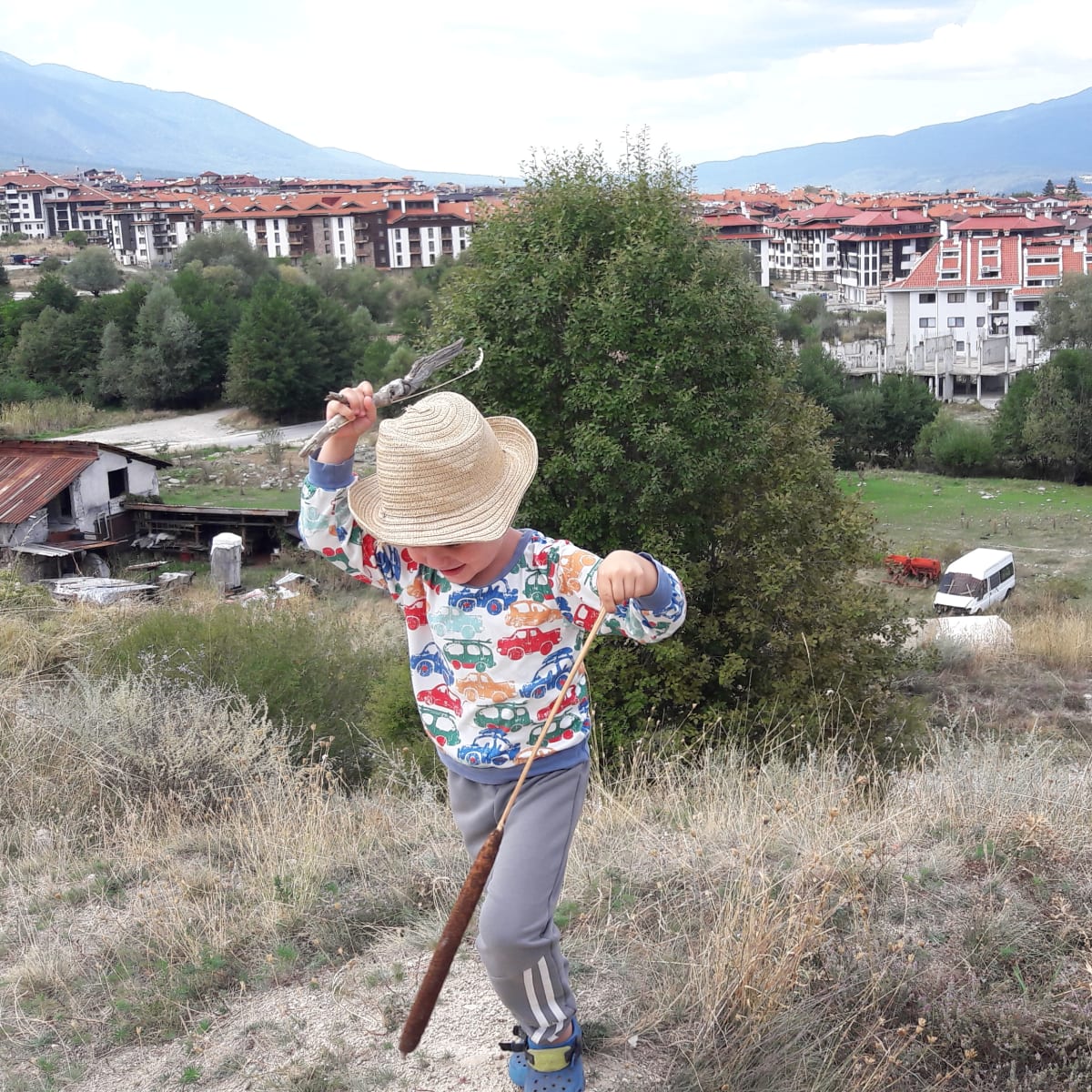
What I loved most was the variety of experiences. On hot days, we would escape into the mountains or head to a forest park, where we’d sit beside a stream and have quiet picnics. Other days, we visited a small local farm where you could ride horses or watch rabbits and partridges wandering about.
The locals were incredibly kind—warm, generous, and grounded. Some would hand us bags of potatoes. Others offered homegrown grapes. Our neighbor, a gentle older man, once gave my son fresh apples. Everything was grown locally—pure, organic, alive. It was the kind of life I had always dreamed of. I even began to imagine growing my own food one day.
There were many farmers in the area, and I found myself deeply admiring them. To me, they represented a kind of freedom—independent, capable, connected to the land. Of course, it’s not easy work. It’s a skill, a discipline. But their work ethic, their authenticity, their generosity—it stayed with me. Bansko showed me that a simpler, freer life is not just a fantasy. It’s possible.
One of our favorite places was Pirin National Park, high up in the mountains. Getting there wasn’t easy—we had to take a minibus—but it was always worth it. On one hike, we met two Indian engineers and ended up spending the day together. Their English was flawless, and conversation flowed effortlessly. We talked, laughed, and shared the climb toward a small mountain lake.
It felt more like climbing than hiking—and I loved that. Fresh air, good company, and a physical challenge—there’s nothing quite like it. When we reached the lake, we walked around it as if it were small enough to circle in minutes, taking in the stillness and the beauty. The men offered to take a photo of me. I usually don’t carry my phone, but I said yes. Later, they sent it to me: I’m standing on a large rock, smiling—completely at peace. And I remember thinking, yes, this is what happiness feels like.
After the hike, we parted ways. My son and I hitched a ride back down with a kind French man who seemed to love Bansko just as much as we did. Conversations came and went easily, just like everything else there.
There were still places we didn’t get to—like the bear sanctuary, which I hope to visit one day. We also explored nearby towns, though none quite matched Bansko’s charm. It had a unique aesthetic: cobblestone streets, cozy red-and-white buildings, small shops along Pirin Street selling handmade cosmetics, and bakeries filled with fresh bread—cranberry, seeded, even chocolate.
Bansko managed to offer the comforts of modern life while preserving its small-town soul. In winter, it transforms—tourists from the UK and across Europe flood in for skiing and snowboarding. It reminded me a bit of Lake Tahoe, but without the overwhelming price tag. That’s part of its magic—it’s stunning, yet accessible.
Spring and summer, however, were my favorite. The town became quiet, almost meditative. Flowers bloomed everywhere, the air felt lighter, and the local market came alive with seasonal produce. I befriended a woman there with striking turquoise eyes. Her stall became my first stop every time. She sold tomatoes, cucumbers, apples, pears, greens, even figs—everything bursting with flavor.
The food was so fresh it almost melted in your mouth. I made simple salads, and my son often ate everything before we even made it home. He became my unofficial “quality control officer.” We once traveled to Montenegro, and he barely touched the food there. I noticed the difference too. Sometimes you need contrast to truly appreciate what you have—and Bansko gave me so much to appreciate.
There was also a cozy pizza place on Pirin Street that we visited often—so often that we became friends with the staff. They were incredibly kind. One time, someone brought my son freshly whipped cream, and his excitement was unforgettable. The place itself mirrored the town: warm wooden interiors, soft music, books on shelves, and a small garden in the back. It was a favorite among digital nomads too.
At the edge of town, near the bus station, there was a large green park where life gathered in the warmer months. Cafés opened, children played, and people came together—locals and visitors alike. Events were held there, including the famous Bansko Jazz Festival. The park was expansive, with a peaceful pond at its center. At one point, it even hosted an open-air art gallery, showcasing breathtaking images of Bulgaria’s nature.
Bansko wasn’t just a place.
It was a feeling.
And a part of me will always belong there.



Day 3
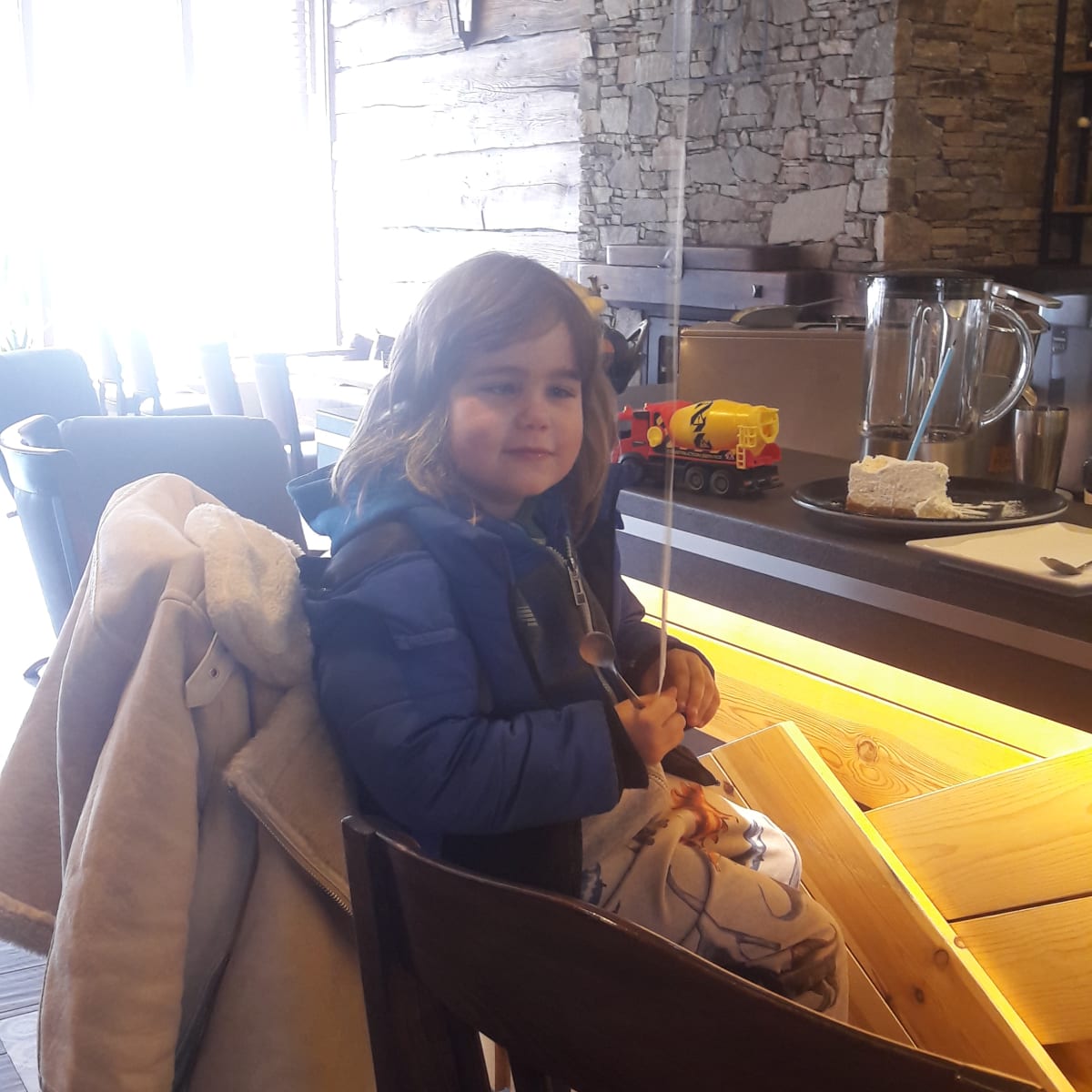
There was also a cozy pizza place on Pirin Street that we visited often—so often that we became friends with the staff. They were incredibly kind. One time, someone brought my son freshly whipped cream, and his excitement was unforgettable. The place itself mirrored the town: warm wooden interiors, soft music, books on shelves, and a small garden in the back. It was a favorite among digital nomads too.
Day 4
Plovdiv felt different. Softer somehow. Older, but in a way that didn’t weigh on you—it invited you in.
It’s one of the oldest cities in Europe, and you can feel that immediately. Not in a loud or overwhelming way, but in quiet details—in the worn stone paths, in the colorful houses leaning gently into one another, in the slow rhythm of the Old Town.
And strangely enough, it gave me a feeling I couldn’t quite place at first—until I realized it felt like Greece and Los Angeles all at once.
There was that Mediterranean warmth, the sun-soaked stillness, the history whispering through every corner—like something you’d feel walking through an old Greek town. But at the same time, there was this lightness, this creative, almost artistic energy that reminded me of Los Angeles. A quiet blend of old soul and modern expression.
Walking through those narrow, winding streets felt like stepping into another time. Cobblestones beneath your feet, wooden balconies above your head, and little hidden corners that made you want to pause, breathe, and just take it all in. There was something deeply romantic about it. Not in a cliché way—but in a grounded, lived-in, almost sacred way.
And then there it was—the ancient amphitheatre, the city’s own version of a colosseum: Ancient Theatre of Philippopolis.
It stood quietly, yet powerfully, carved into the hillside as if it had always belonged there. Unlike the grand scale of Colosseum, this one felt more intimate. You could sit on its worn stone seats, look out over the city, and imagine the echoes of voices from thousands of years ago. It wasn’t just something to look at—it was something to feel.
Plovdiv had this effortless blend of past and present. Art galleries tucked into old buildings. Small cafés hidden between history. Creative energy flowing through ancient streets. It didn’t try too hard—it didn’t need to. Its beauty was quiet, confident, and deeply rooted.
It’s the kind of place where you don’t rush. You wander. You get lost on purpose. And somehow, that’s exactly how you find what you didn’t know you were looking for.


Day 5
Sofia didn’t try to impress me right away. It wasn’t love at first sight like Bansko. It was something quieter. Slower. The kind of place that reveals itself layer by layer—if you’re willing to pay attention.
At first, it felt like any capital city—movement, noise, people rushing with purpose. But the more time I spent there, the more I began to notice a different rhythm underneath it all. Something softer. More grounded.
What stood out to me almost immediately was the focus on food and wellbeing. There were so many small shops offering organic, locally sourced products—fresh vegetables, herbal teas, natural remedies, handmade cosmetics. It didn’t feel like a trend. It felt like a way of life. Like people genuinely cared about what they were putting into their bodies.
I found myself wandering into little stores filled with oils, herbs, and natural skincare—simple, clean, and thoughtfully made. But beyond that, the city center had this beautiful creative pulse. There were so many artistic and independent shops—places selling handmade jewelry, ceramics, paintings, unique clothing pieces, and thoughtfully crafted home goods. Each shop felt personal, almost like stepping into someone’s world rather than just a place of business. You could feel the creativity in the air, subtle but present.
The city itself was a mix of old and new. Some streets felt modern and busy, while others carried a quiet sense of history. You could be walking past shops and cafés and suddenly find yourself standing in front of something ancient, like Alexander Nevsky Cathedral—massive, golden-domed, impossible to ignore. It stood there like a silent guardian of the city.
Not far from it, hidden almost unexpectedly, was Church of St. George Rotunda—small, circular, and made of red brick. One of the oldest buildings in the city, quietly holding centuries within its walls. Places like that made you stop, even if just for a moment.
And then there were the mineral springs near Central Mineral Baths. People still gathered there, filling bottles with natural spring water like it was the most normal thing in the world. Something about that felt deeply grounding—ancient habits still alive in modern life.
One moment that stayed with me happened when I was trying to find a place and clearly looked a bit lost. A man from Turkey approached me and offered to help. Not only did he give directions—he walked me there.
We ended up talking along the way. He told me about his import business, how he traveled often, moving between countries in search of the right products. At that moment, he was in Sofia sourcing items for his cosmetics business. There was something inspiring about that—this quiet, everyday ambition. Just a person building something, moving through the world with purpose.
It was such a simple interaction, but it stayed with me. A reminder of how open and interconnected the world can feel in places like this.
Sofia wasn’t overwhelming in the way some big cities are. It had space to breathe. Space to notice things. Space to connect.
It didn’t sweep me off my feet—but it didn’t need to.
It stayed with me in a different way.


Anything you would add or do differently?
-
Looking back, there are a few things I would shift—not out of regret, but out of awareness.
I would have documented a little more. Not everything—but just enough to capture the small, quiet moments that tend to fade over time. The markets, the conversations, the everyday scenes that don’t feel important in the moment but become meaningful later.
There were places I heard about but never made it to—like the bear sanctuary near Bansko or some of the more remote villages. Those feel like unfinished chapters I’d like to return to.
And maybe most importantly, I would have allowed myself to be even more present. Less thinking, less analyzing, more just… being.


